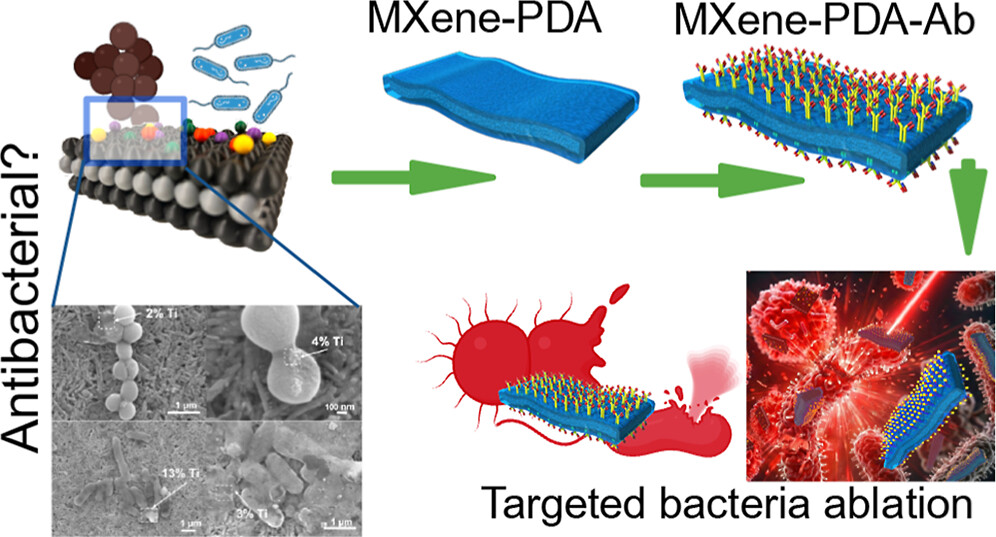
Do MXene nanosheets have inherent antibacterial properties? A systematic study of high-quality Ti-, V-, and Nb-based MXenes shows negligible intrinsic antimicrobial activity but reveals strong promise for targeted photothermal antibacterial applications.
Revisiting the Antibacterial Role of MXenes: From Inherent Activity to Smart Photothermal Strategies
MXenes are an emerging family of two-dimensional nanomaterials that have gained considerable attention in biomedical research due to their outstanding biocompatibility, chemical versatility, and unique physicochemical properties. Despite these favorable characteristics, MXenes are frequently reported to exhibit strong antibacterial activity. This apparent paradox raises a critical question: can a material that is inherently biocompatible also possess intrinsic antibacterial toxicity, or does its antibacterial performance arise from alternative mechanisms?
Do MXenes Have Intrinsic Antibacterial Properties?
To clarify this question, high-purity MXene nanosheets (Ti₃C₂Tₓ, Nb₂CTₓ, V₂CTₓ, and Ti₃CNTₓ) with well-defined flake sizes were systematically studied. Advanced structural and chemical analyses verified their pristine nature, demonstrating negligible oxidation and no detectable etching byproducts.
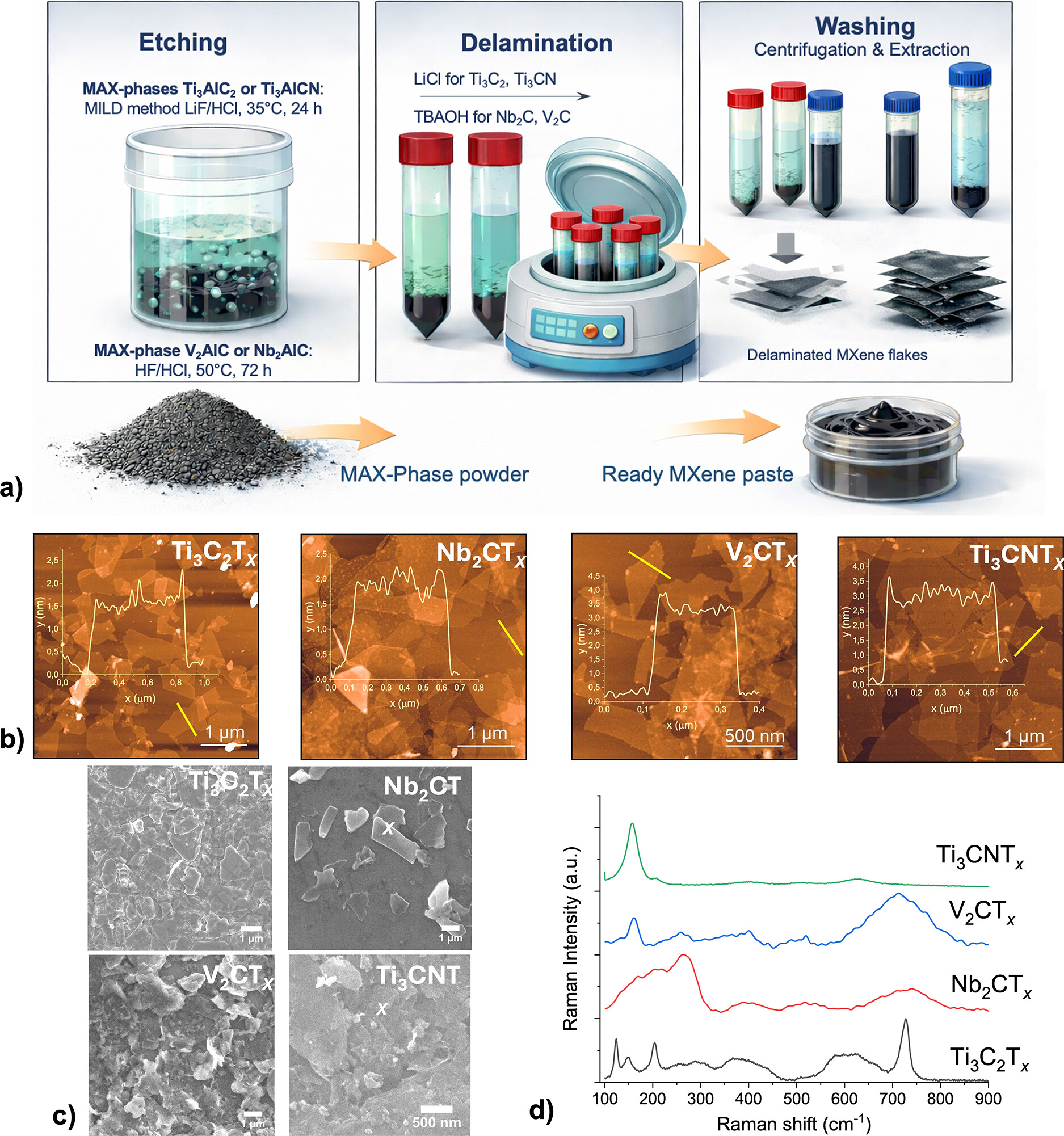
The antibacterial properties of MXenes were systematically evaluated using multiple in vitro assays and an in vivo wound model. At biologically relevant, non-toxic concentrations, pristine MXenes exhibited no intrinsic antibacterial activity, and neither ROS-mediated toxicity nor the proposed “nano-knife” mechanism was supported. These findings suggest that antibacterial effects reported in earlier studies likely originated from extrinsic factors such as residual etching byproducts, surface fluorination, structural defects, or partial oxidation rather than from the MXenes themselves.
Despite this, MXenes—particularly Ti₃C₂Tₓ—demonstrate strong potential for photothermal antibacterial therapy. Under near-infrared irradiation, MXene nanosheets efficiently generate localized heat, achieving rapid bacterial eradication in vitro and accelerated wound healing in vivo. Antibody-functionalized MXenes further enable targeted photothermal treatment, selectively eliminating E. coli. Overall, MXenes are best regarded not as intrinsic antibacterial agents, but as biocompatible, externally activatable platforms for precise and controllable antimicrobial therapy.